Novel Functional Silicones with Polyethylene Glycol Side Chains
Web Published:
10/27/2025
DESCRIPTION
A new silicone-based graft copolymer featuring reactive end groups and poly(ethylene glycol) (PEG) side chains has been developed. The method uses thiol-terminated PEG that reacts with vinyl-functional silicones, enabling tunable PEG chain lengths and silicone molecular weights. These reactive graft polymers can be incorporated into other polymer systems, such as polyurethanes, to provide amphiphilic surface properties.
|
|
|
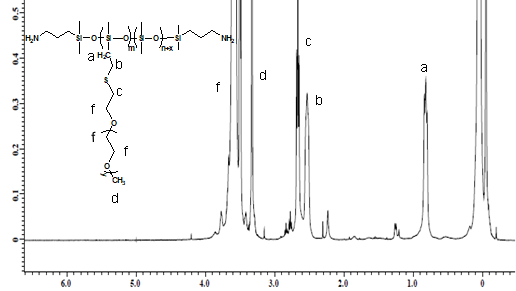
Figure 3: The 1H NMR spectrum of siloxane-PEG copolymer.
|
Benefits
- Amphiphilic surface behavior: The graft-polymer combines a hydrophobic polysiloxane backbone with hydrophilic polyalkylene oxide (e.g., PEG) side chains, giving surfaces both low-energy and protein-/bio-fouling-resistant character.
- Tunable architecture: It can vary the siloxane backbone molecular weight, number and length of grafted PEG chains, and presence/absence of reactive end groups — enabling tailored performance for different applications.
- Reactive end-groups enable integration: The polymer can include functional end groups (amines, hydroxyls, etc) to react with other polymers (e.g., polyurethanes), so you can embed the functional graft‐polymer into bulk materials rather than just coatings.
- Broad application scope: Useful in marine (anti-biofouling coatings), biomedical (protein-resistant surfaces on implants/devices), industrial (lubricants, adhesives, films), and general surface-modification settings.
- Enhanced durability and performance: By incorporating the graft-polymer into tougher polymers (like PU), you can get the surface functionality (amphiphilic, low‐fouling) while retaining bulk mechanical robustness.
Patents
This technology is patented in the U.S. (Issued US Patent US9169359B2) and is available for licensing/partnering opportunities.
Patent Information:
| Title |
App Type |
Country |
Serial No. |
Patent No. |
File Date |
Issued Date |
Expire Date |
Patent Status |
|
|
|
Inventors:
Keywords:
|